
Germany is the only country in the world where you can earn a degree from a world-class public university without paying a single euro in tuition, and Nigerians are doing it right now.
Table of Contents
- Study in Germany for Free for Nigerian Students: Is It Really Possible?
- Is Studying in Germany as a Nigerian Student Actually Realistic?
- What Are the German Student Visa Requirements from Nigeria?
- How to Find the Right Free University in Germany for Nigerians
- The Step-by-Step Application Process for Nigerian Students (With Realistic Timelines)
- Germany vs Other Study Destinations: The Real Cost Comparison
- When Application Portals Open: How to Time Your Study in Germany Application
- The Best German Cities for Nigerian Students in 2026
- What It Actually Costs to Live in Germany as a Nigerian Student
- Can You Work While You Study in Germany?
- Common Mistakes Nigerian Students Make When Applying to Study in Germany
- Life After You Arrive: What Nobody Tells You About Studying in Germany
- Frequently Asked Questions: Study in Germany for Free as a Nigerian
- Final Thoughts on How to Study in Germany for Free for Nigerian Students
If you want to study in Germany for free for Nigerian students, this guide is exactly what you need. There’s a moment every Nigerian student has at some point. You’re sitting there, maybe late at night, wondering how people actually leave. How do they study abroad without rich parents or some life-changing scholarship? How everyone else seems to figure it out while you’re still stuck going in circles.
I used to be in that exact position.
At first, Germany was not even on my radar. I was chasing other countries, as most people do. I applied to study in Dublin for a Master’s in International Business and Management. I prepared properly, wrote the PTE exam, passed it, and got all my documents ready. Admission didn’t come through.
So I moved on. I applied to universities in Poland. This time, I got admission. I thought I was finally on track. I applied for the visa, waited, and then got rejected. I appealed the decision, hoping it would change something, but it didn’t. Another rejection.
At that point, it starts to feel personal. Like, maybe this whole study abroad thing is not meant for you. Like you’re missing something everyone else already knows.
Then someone mentioned Germany to me. Not because of free education. Just as another option.
I applied to universities in Germany without even knowing that public universities here don’t charge tuition. I went straight for private universities because they were the only ones replying fast. I got admission, and the tuition was about €12,000 per year. At that time, I thought that was normal.
It was only after I arrived in Germany and started struggling to keep up with the fees that I sat down and really started researching properly. That was when everything changed.
I discovered that there were public universities in Germany offering the same or even better education for zero tuition. That discovery changed my understanding of what it really means to study in Germany for free for Nigerian students.
I can’t lie, I was upset. I had already paid a huge amount of money. Around €12,000 just for tuition, not even counting accommodation, feeding, and other expenses. The university was SRH University of Applied Sciences in Dresden, where I was studying hotel management. And even with that €12,000, there were still extra semester fees, exam fees, and contributions.
That was the moment I told myself the truth. This doesn’t make sense.
So I made a decision. I stopped, reset, and applied again, this time to public universities. On my first real attempt, I got admission to study International Tourism Management, including Health and Medical Tourism, at Deggendorf Institute of Technology. That reset is exactly what this guide to study in Germany for free for Nigerian students is designed to help you avoid.
That moment changed everything for me. And that is exactly why I’m writing this. So you don’t make the same mistake I made. This is my complete guide on how to studying in Germany as a Nigerian, based on real experience.
Study in Germany for Free for Nigerian Students: Is It Really Possible?
Yes. Public universities in Germany charge zero tuition fees to all students, including international students from Nigeria. You will pay a small semester contribution of roughly €150 to €350, which usually includes a public transport pass. Beyond that, your costs are living expenses, not tuition. This is confirmed by German law and applies to every public university in the country.
What “Free” Actually Means When You Study in Germany Without Tuition
Let’s clear this up properly, because this is where a lot of people get tripped up.
When people say you can study in Germany for free as a Nigerian student, they are specifically talking about tuition fees. Public universities in Germany, which are funded by the state, do not charge tuition to any student, domestic or international. It doesn’t matter where you are from. If you are enrolled in a public German university, you are not paying tuition. That is the law, and it applies to you, too.
But free tuition does not mean free life. And that distinction is important. Every person who wants to study in Germany for free for Nigerian students needs to understand the full picture.
Every semester, you pay a semester contribution. This is not tuition. Think of it as an administrative and student services fee. The amount varies by university and state, but it usually falls somewhere between €150 and €350 per semester. The good news is that this contribution almost always includes a semester ticket, which gives you free or heavily discounted access to public transport across the entire state or city. In Germany, this is genuinely valuable. Transport here is not cheap, so having it covered is a real benefit.
Beyond the semester fee, your actual living costs are what you need to budget seriously. Accommodation, food, health insurance, phone, clothing, and everyday expenses all add up. Germany is not the cheapest country in Europe, but it is far more manageable than people assume if you plan properly.
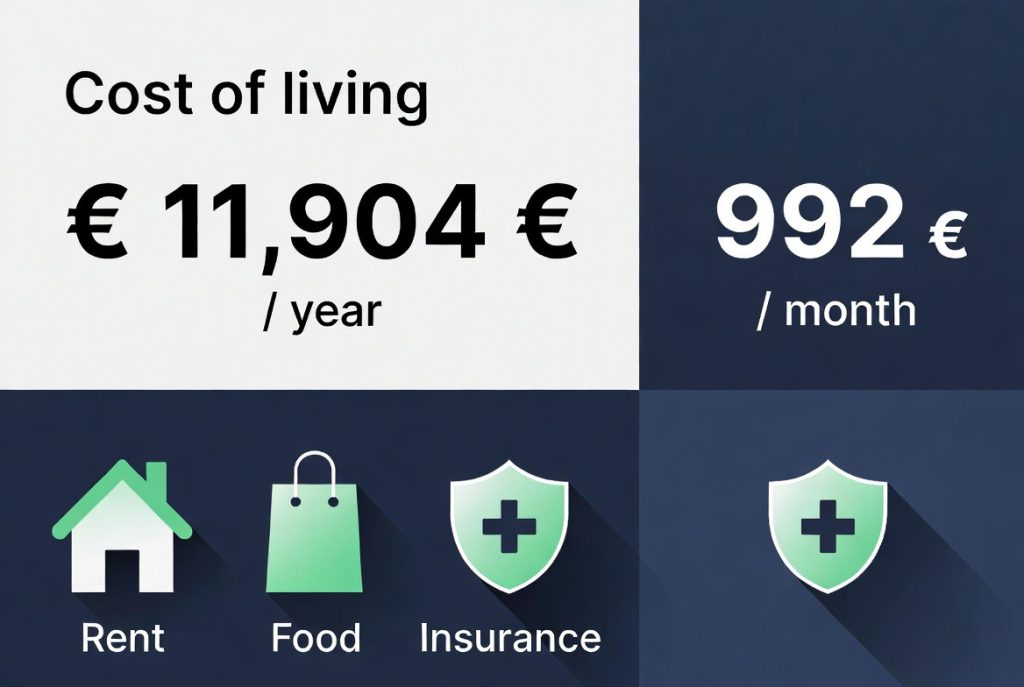
The other piece people often miss is the blocked account requirement. To get a student visa for Germany, you must prove that you can financially support yourself. As of 2026, the blocked account requirement in Germany sits at around €11,904 per year, which works out to €992 per month. This money is deposited into a special account before your visa is approved, and you can only withdraw it in monthly amounts once you arrive. It is not money you lose. It is money you set aside for yourself, but it must exist before the visa comes through.
If you don’t understand the blocked account early in your planning, it will become a major obstacle later. This was one of the things I had to figure out the hard way.
So when someone tells you that studying in Germany is free, the accurate version of that statement is this: tuition is free, but you still need real money to live and to get there. Once you understand that clearly, you can plan for it properly.
Is Studying in Germany as a Nigerian Student Actually Realistic?
This is the question most people are actually asking, even when they don’t say it directly. And the honest answer is yes, it is realistic. But only if you approach it the right way.
The Blocked Account Strategy
One of the biggest financial hurdles when planning to study in Germany for free for Nigerian students is the blocked account requirement. The blocked account is often the first real barrier Nigerian students face, and it catches a lot of people off guard. Nearly €12,000 is a significant sum, and not everyone has it sitting around. The key is to start planning for this early, ideally six to twelve months before you intend to apply for your visa.
For anyone planning to pursuing free education in Germany for Nigerians, opening a blocked account is a non-negotiable step. The most commonly used providers are Fintiba and Coracle. Both are Deutsche Bank-backed and widely accepted by German embassies. The process for opening one is relatively straightforward. You apply online, complete verification, and transfer the funds. However, there can be delays with international transfers from Nigeria, so give yourself at least four to six weeks for the entire process.
One thing worth knowing is that the blocked account is specifically for living expenses. It is separate from any tuition or semester fees. And because it is released to you monthly after you arrive, it effectively acts as your own personal student stipend while you settle in.
Your Academic Qualification and Anabin Germany Recognition
When you decide to study in Germany for free for Nigerian students, your qualifications will be assessed carefully. Germany has a very specific way of assessing foreign qualifications, and Nigerian students need to be especially careful here. Germany does not simply accept certificates at face value. There is an official database called Anabin, maintained by the German academic recognition authority, and it is where you go to find out whether your Nigerian qualifications are recognised by German universities.
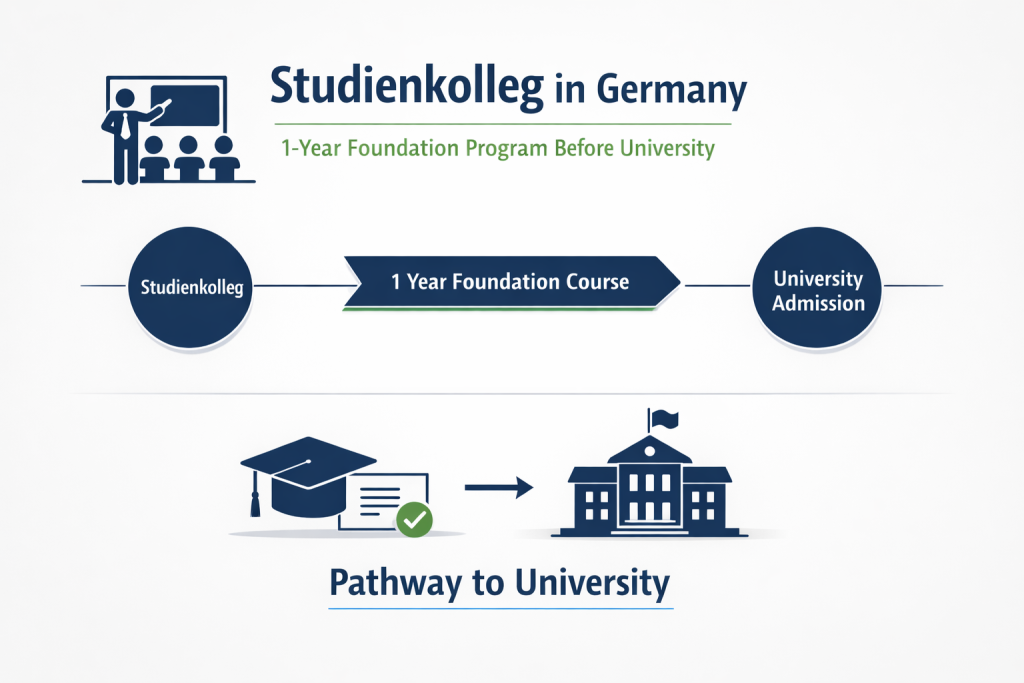
If you hold a Nigerian secondary school certificate, such as WAEC or NECO, in most cases you will not be directly eligible for undergraduate admission at a German university. Instead, you will likely need to complete a Studienkolleg, which is a one-year preparatory foundation course that brings your academic level in line with the German entry standard. This is not a punishment or a setback. It is a structured pathway that thousands of international students go through every year.
If you already hold a Nigerian university degree, the situation is different. Many Nigerian bachelor’s degrees are recognised for postgraduate admission, but this varies depending on the institution, the course of study, and the specific German university you are applying to. Always check Anabin first, and then confirm directly with the university’s admissions office.
Language Requirements
If your chosen program is taught in English, you will need to prove your English proficiency. The most commonly accepted tests are IELTS and PTE Academic. I personally sat the PTE exam during my own application journey, so I know how important it is not to leave this step to the last minute. Some universities also accept TOEFL, but always confirm with each institution individually.
If you are applying to a German-taught program, you will need to provide evidence of German language proficiency, typically at B2 or C1 level on the CEFR scale, through tests like TestDaF or DSH.
The German Student Visa Nigeria Reality
The German student visa is a critical milestone for anyone who wants to study in Germany for free for Nigerian students. Getting a German student visa as a Nigerian is doable, but it requires preparation and the right mindset. Visa appointments are booked at the German Embassy in Abuja or the Consulate in Lagos. Demand is high, and appointment slots book up quickly, so once you have your admission letter, start looking for an appointment immediately.
The visa interview itself is not an interrogation. The consular officer simply wants to understand your purpose, confirm that your documents are in order, and be satisfied that you have the financial means to support yourself. Be clear, honest, and specific about your program, your university, your funding, and your plans after graduation. Avoid vague answers.
Processing time after your interview is typically two to three weeks, but getting the appointment in the first place can take significantly longer. Factor this into your timeline.
Germany is realistic for Nigerians. The system works. But it rewards people who take the time to understand it before they start. The path to study in Germany for free for Nigerian students is clear once you understand the steps.
What Are the German Student Visa Requirements from Nigeria?
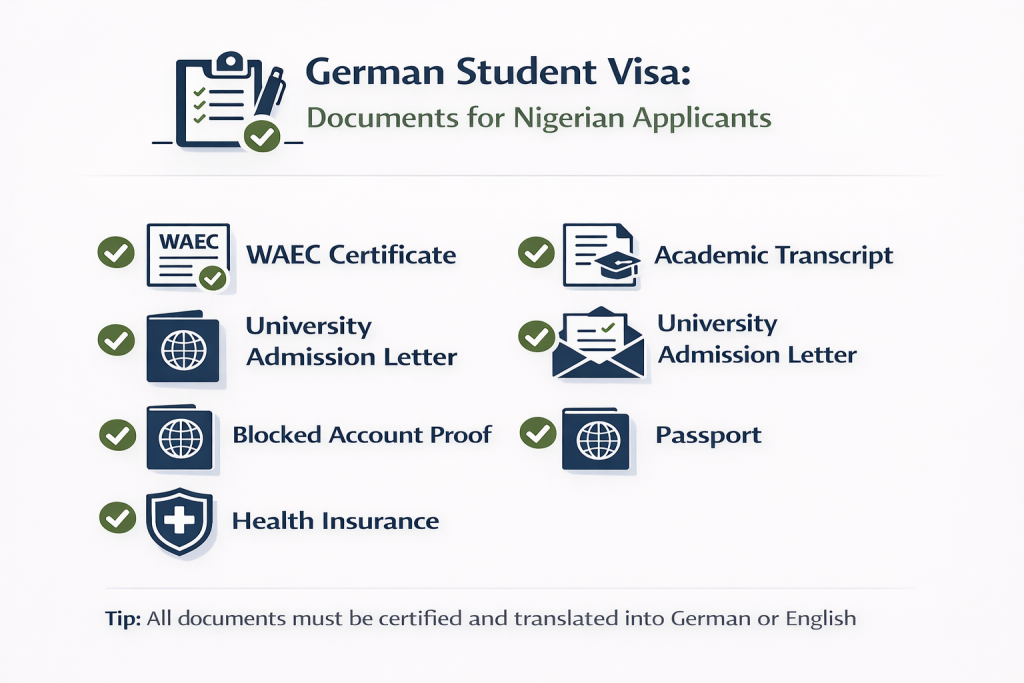
To apply for a German student visa from Nigeria, you need a confirmed university admission letter, a valid international passport, proof of a blocked account showing at least €11,904, valid health insurance, your academic certificates and transcripts verified through Anabin, a language test certificate (IELTS, PTE, or German equivalent), a motivation letter, and a completed visa application form. Appointments are made at the German Embassy in Abuja or the Consulate in Lagos.
If you want step-by-step help navigating the visa process, the GrandRoyal German student visa guide walks you through every requirement so you do not miss anything.
How to Find the Right Free University in Germany for Nigerians
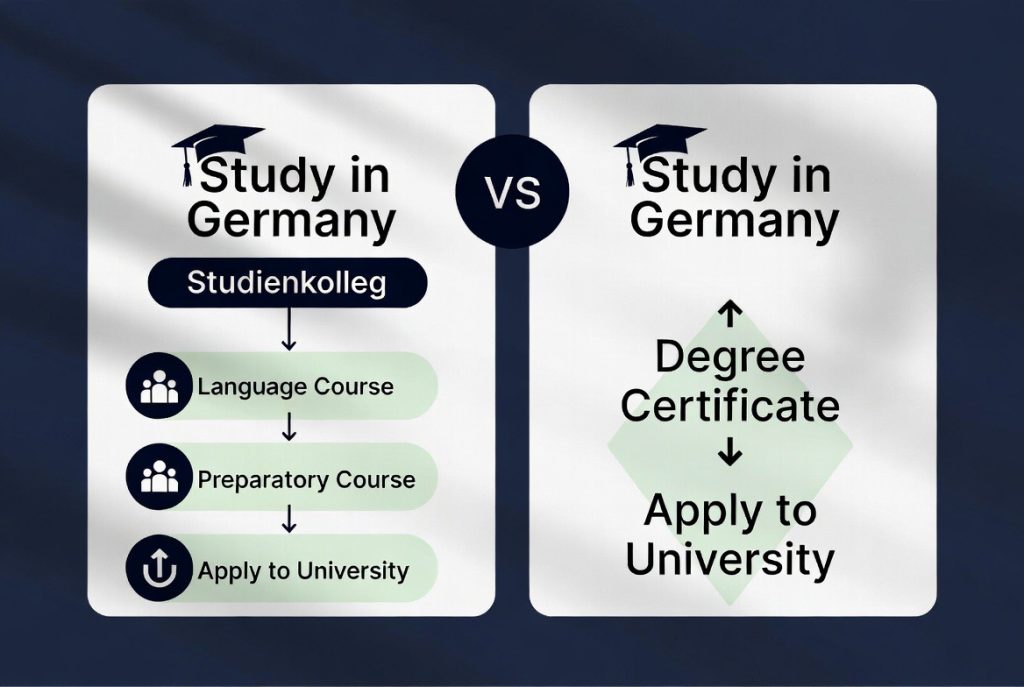
This step is where a lot of Nigerian students make their first major mistake, and I am living proof of that.
When you want to study in Germany for free for Nigerian students, the university you choose matters enormously. Do not just Google “free universities in Germany for Nigerians” and start applying to whatever shows up first. That is exactly how people end up in expensive private schools. Private universities in Germany are aggressively marketed, they respond quickly, and they make the process feel easy. That ease is part of their business model. They need your tuition money.
Public universities, on the other hand, are quieter in their outreach. They are not chasing students. They are simply there, fully funded by the German government, offering world-class education at no tuition cost.
Start With DAAD Germany Programs
The German Academic Exchange Service, known as DAAD, is the best starting point for any Nigerian student researching how to study in Germany. Their program database at daad.de lets you filter by subject, language of instruction, degree level, and more. You can find hundreds of English-taught programs at public universities across every field imaginable. DAAD Germany programs also include scholarship opportunities for international students, which are worth exploring if you want additional financial support beyond your own savings.
Check Anabin for Recognition
Once you have a shortlist of programs, go to the Anabin database and look up your home institution and qualification. This tells you exactly how German universities will view your credentials. If your Nigerian university or degree has an H+ or H status on Anabin, you are in a strong position. If it is unlisted or unclear, contact the university’s admissions office directly and ask them how they handle Nigerian qualifications.
Understand the uni-assist Germany Application Process
Some German universities handle their own international admissions directly. Others use a centralised platform called uni-assist, which processes applications on behalf of multiple universities. If your target university uses uni-assist, you submit your documents through that platform rather than directly to the university. There is an application fee involved, so factor that into your budget. Confirm early which application route applies to your chosen institutions, because submitting through the wrong channel can delay or invalidate your application.
Choose Based on Value, Not Response Speed
This is the single most important lesson I can give you from personal experience. The university that emails you back within 48 hours is not automatically the best choice. Choose based on the quality of the program, the location and cost of living in that city, the university’s reputation in your field, and the career outcomes it offers.
Some strong public universities worth knowing about include RWTH Aachen University for engineering, the Technical University of Berlin for architecture and technology, the University of Hamburg for business and social sciences, and Deggendorf Institute of Technology for tourism, technology, and applied sciences. These universities charge zero tuition and offer genuine academic quality.
If you want to explore broader study abroad options across Europe, this is a good place to start: how to study across Europe for free or low cost
The Step-by-Step Application Process for Nigerian Students (With Realistic Timelines)
The application process for those who want to study in Germany for free for Nigerian students is straightforward when followed correctly. A lot of articles give you a list of steps without telling you what they actually look like in real life. Here is the process as it genuinely works.
Step 1: Research and shortlist programs (3 to 6 months before deadline)
The research phase is where every successful plan to studying in Germany without tuition begins. DAAD is the starting point for everyone serious about studying in Germany for free for Nigerian students. Use DAAD to find programs that match your background and interests. Confirm language requirements, check intake dates, and verify whether you need Studienkolleg.
Step 2: Check your qualifications on Anabin (same period)
Do this early. If your qualification needs additional documentation or assessment, you need time to gather that before you apply.
Step 3: Prepare your documents
The standard document list for most German universities includes your academic certificates and transcripts, your language test result, a CV in European format, a motivation letter tailored to each program, a valid passport, and sometimes a portfolio or reference letters depending on the course.
Your motivation letter matters more than people think. It should be specific about why you chose that particular program, what your academic background brings to it, and what you intend to do after graduation. Generic motivation letters are easy to spot and rarely convincing.
Step 4: Apply through the university or uni-assist (6 to 9 months before intake)
German universities typically have two intake periods. The winter semester starts in October, and applications usually close between May and July. The summer semester starts in April, and applications usually close between November and January. Missing a deadline means waiting another full semester, so timing is everything.
Step 5: Receive your admission letter and prepare financially
This is the most exciting stage for those who chose to study in Germany for free for Nigerian students. Once you receive a conditional or full admission offer, open your blocked account, purchase student health insurance, and begin booking your visa appointment. Do not wait for all three to align perfectly. Start all three simultaneously.
Step 6: Attend your German student visa interview
Bring every document they ask for, plus copies. Dress professionally. Be confident and specific. Consular officers see hundreds of applicants. The ones who know exactly what they are doing and why stand out for the right reasons.
Step 7: Arrive, register, and settle
Once in Germany, you need to register your address at the local Einwohnermeldeamt within two weeks of arrival. This is not optional. It is a legal requirement, and almost everything else, including your bank account and student enrollment confirmation, depends on it.
Germany vs Other Study Destinations: The Real Cost Comparison
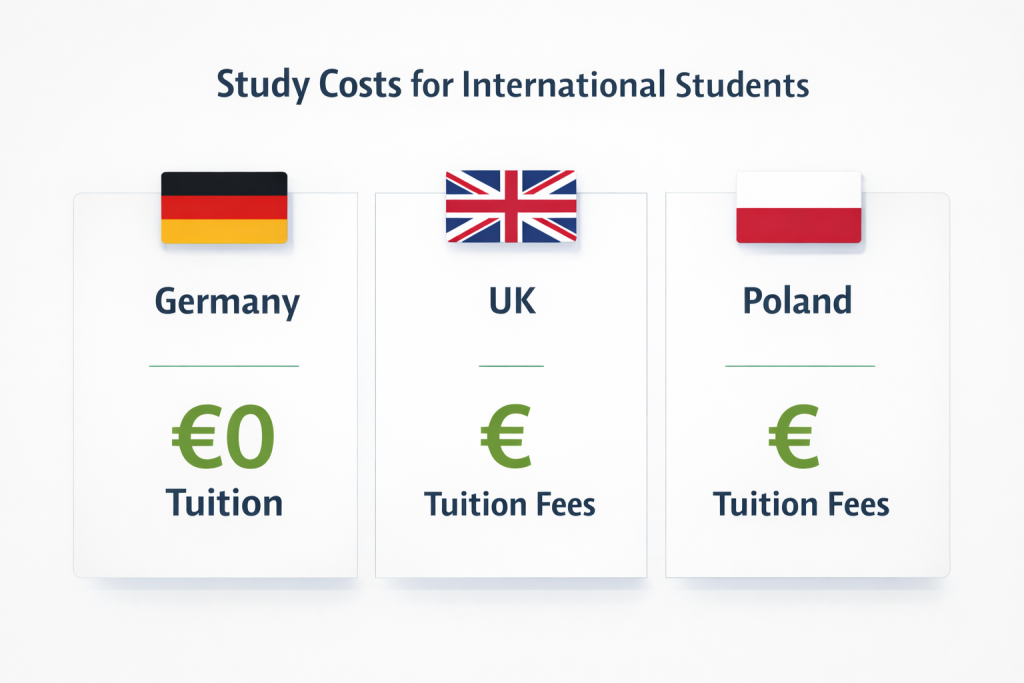
Many people who want to study in Germany for free for Nigerian students never compare it against other destinations. This is a conversation Nigerian students rarely have, and it is one of the most important ones.
Most people compare countries emotionally, chasing prestige or proximity to family abroad, without sitting down and looking at what each destination actually costs. When you do that exercise honestly, Germany looks very different from the countries most people default to.
Tuition Fees Per Year for International Students
| Country | Average Annual Tuition |
|---|---|
| Germany (public universities) | €0 |
| United Kingdom | £15,000 to £30,000 |
| United States | $20,000 to $55,000 |
| Canada | CAD $20,000 to $35,000 |
| Australia | AUD $20,000 to $45,000 |
That first row is not a typo. Public universities in Germany charge zero tuition for international students. Every other major English-speaking destination charges significant tuition, often requiring loans, sponsorships, or family financial sacrifice that follows students for years after graduation.
Monthly Cost of Living Compared
| Country | Accommodation | Food | Transport | Total Estimate |
|---|---|---|---|---|
| Germany | €300 to €600 | €150 to €250 | Often free via semester ticket | €650 to €1,050 |
| United Kingdom | £700 to £1,200 | £200 to £350 | £80 to £150 | £980 to £1,700 |
| United States | $800 to $1,500 | $300 to $500 | $100 to $200 | $1,200 to $2,200 |
| Canada | CAD $800 to $1,400 | CAD $300 to $500 | CAD $100 to $150 | CAD $1,200 to $2,050 |
| Australia | AUD $900 to $1,600 | AUD $300 to $500 | AUD $100 to $200 | AUD $1,300 to $2,300 |
The gap is significant. A Nigerian student in the UK or US is spending roughly double what a student in Germany spends monthly, on top of paying tens of thousands in tuition. When you add both together over a three or four-year degree, the financial difference is staggering.
Post-Study Work Rights Compared
| Country | Post-Study Work Visa | Path to Permanent Residency |
|---|---|---|
| Germany | 18-month job-seeking visa after graduation | Possible after 2 to 5 years of skilled employment |
| United Kingdom | 2-year Graduate Route visa | Complex and increasingly restrictive |
| United States | OPT for 12 months (up to 3 years for STEM) | Heavily dependent on employer sponsorship |
| Canada | Post-Graduation Work Permit up to 3 years | Strong PR pathways through Express Entry |
| Australia | 2 to 4 years, depending on degree and location | Employer-sponsored or skilled migration |
Germany’s 18-month job-seeking visa gives you time to find work without the immediate pressure of employer sponsorship. And once you are employed in a skilled role, the path to permanent residency is relatively structured and achievable, especially compared to the US where H-1B lotteries make long-term stay extremely uncertain.
Why Germany Stands Out Beyond the Numbers
Germany is centrally located in Europe, which means as a student you can travel to France, the Netherlands, Czech Republic, Austria, and more for a weekend without spending a fortune. If budget travel across Europe interests you, being based in Germany gives you a natural advantage that students in the US, Canada, or Australia simply do not have. Being based in Germany gives you a genuine edge. This complete guide to budget travel in Europe as a student covers cheap transport, affordable cities, and practical money-saving strategies once you are on the ground.
The healthcare system is another underrated advantage. As a student in Germany, you are covered by statutory health insurance for around €110 per month. In the United States, student health insurance can cost several hundred dollars a month and still leave you with significant out-of-pocket expenses.
Germany also has a strong engineering, technology, and manufacturing economy. Companies like Bosch, Volkswagen, Siemens, SAP, and Deutsche Telekom are all headquartered here, and many actively recruit from German universities.
The language adjustment is real, and it takes effort. But being genuinely bilingual in German and English after your degree is a professional asset that follows you everywhere in the world.
When Application Portals Open: How to Time Your Study in Germany Application
Getting the timing right is something every person planning to study in Germany for free for Nigerian students must prioritise. Timing your application correctly is one of the most overlooked parts of the process, and it is the difference between a smooth journey and missing your window entirely.
Winter Semester (October Start)
This is the main intake, and the one where most programs are available. Application portals at most German universities open between January and March of that same year. Deadlines typically fall between May and July, though competitive programs may close earlier. If you are applying through uni-assist, add two to four weeks to your timeline because they process documents before forwarding them to the university.
A realistic timeline for the winter semester looks like this. Start your DAAD research and Anabin checks in October or November of the previous year. Take your language exam no later than February. Begin preparing documents and drafting motivation letters in January. Submit applications by May at the latest. Expect admission decisions between June and August. Open your blocked account and book your visa appointment immediately upon receiving your admission letter. Arrive in Germany in September, in time for orientation week.
Summer Semester (April Start)
Not all programs run in the summer semester, but many do, especially at applied sciences universities. Application portals for summer typically open in September or October of the previous year, with deadlines falling between November and January.
The summer semester is worth considering if you missed the winter window or if your chosen program specifically runs on that cycle. Competition is also lower in some programs during this intake, since most international students default to the winter semester.
A Note on Application Fees
Budget planning is important when you decide to study in Germany for free for Nigerian students. Applying to German universities is not always free. If you apply through uni-assist, there is a processing fee of around €75 for the first application and €30 for each additional one. Some universities charge a direct application fee as well. Budget for this, and apply to at least three to five programs rather than putting everything on one choice.
The Best German Cities for Nigerian Students in 2026
Everyone knows Berlin and Munich. They attract the bulk of international student applications, which means higher competition, higher costs, and longer waiting times for student housing.
As a Nigerian student, choosing a less saturated city is often the smarter move. The academic quality at universities in smaller German cities is not inferior. Germany’s public university system is designed to be consistently strong across the country.
Here are the cities worth seriously considering.
Deggendorf is a smaller Bavarian city home to Deggendorf Institute of Technology. It has a strong international student community, excellent applied sciences programs, and a very manageable cost of living. This is where I studied, and the lower competition for admission made the process significantly smoother.
Chemnitz in Saxony is one of the most affordable student cities in Germany. The Technical University of Chemnitz offers strong programs in engineering and computer science. Rent here can be as low as €200 to €300 per month.
Dortmund in North Rhine-Westphalia has TU Dortmund University with strong programs in statistics, engineering, and journalism. It is a larger but still affordable city with good transport connections across the region.
Magdeburg in Saxony-Anhalt is an underrated option. Otto von Guericke University Magdeburg has growing international programs, particularly in engineering and medicine-related fields. Living costs are low, and the city is easily to Berlin.
Kassel in Hesse is home to the University of Kassel, offering programs in arts, architecture, social sciences, and engineering. It is calm, affordable, and attracts fewer international students than the major hubs.
Cottbus through Brandenburg University of Technology is worth mentioning for students interested in environmental engineering, energy systems, and sustainability. The city is small and very affordable, and the university actively recruits international students.
This principle is key for everyone who wants to study in Germany for free for Nigerian students on a tight budget. A smaller city does not mean a smaller opportunity. Your degree from a German public university carries the same weight regardless of which city it comes from.
What It Actually Costs to Live in Germany as a Nigerian Student
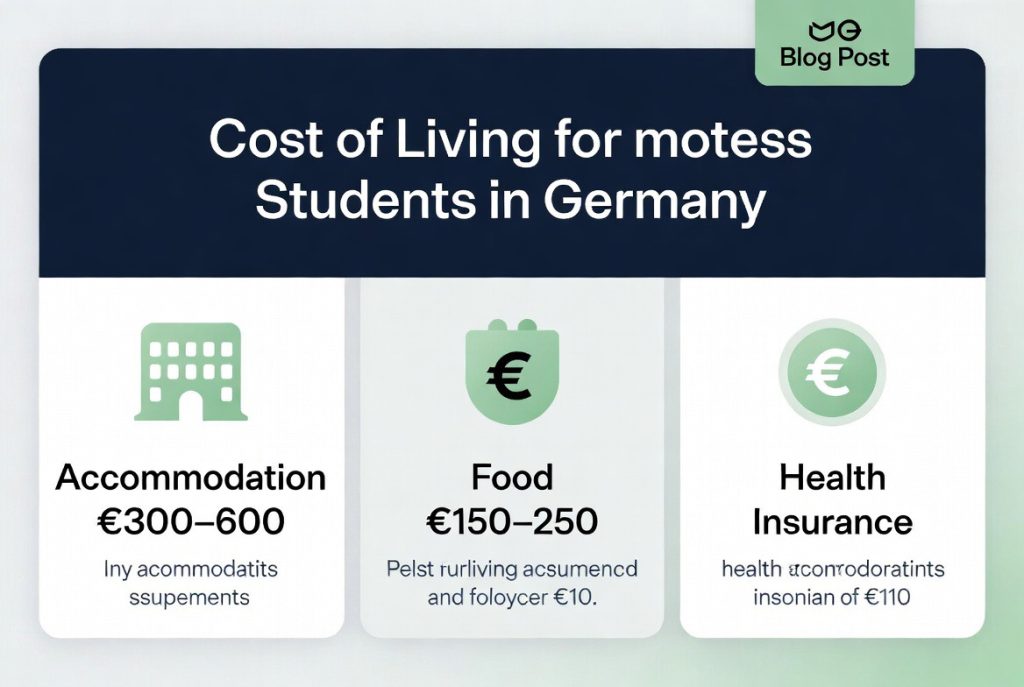
The cost of living in Germany is real, but it is not as frightening as people sometimes make it sound. If you are disciplined and intentional about how you spend, you can live well on a student budget.
Accommodation is your highest cost. A room in a student dormitory runs from about €200 to €350 per month. Private accommodation in shared apartments, known as WG (Wohngemeinschaft), typically costs between €350 and €600 depending on the city. Munich and Frankfurt are on the higher end. Smaller cities like Chemnitz, Magdeburg, and Dortmund are significantly cheaper.
Food costs depend heavily on whether you cook. If you cook most of your meals, you can manage on about €150 to €250 per month. German supermarkets like Aldi, Lidl, Netto, and Penny are very affordable.
Health insurance is mandatory for all students in Germany. For students under 30, statutory health insurance costs around €110 to €120 per month.
Transport is often covered by your semester ticket. In many states, it now covers regional train travel across the entire state, not just within the city. This is one of the reasons so many choose to study in Germany for free for Nigerian students rather than other expensive destinations.
Realistically, your monthly budget as a student in Germany will fall somewhere between €700 and €1,000 per month, depending on your city and lifestyle.
For a deeper look at affordable living while studying and travelling in Europe, this guide on what living cheaply in Europe actually looks like is a practical starting point.
How Much Does It Cost to Study in Germany as an International Student?
Tuition at public German universities is free for international students. The only compulsory payment is a semester contribution of €150 to €350, which often includes a public transport pass. Monthly living costs typically range from €700 to €1,000, covering accommodation, food, health insurance, and daily expenses. The German student visa also requires a blocked account of approximately €11,904 per year as proof of financial support.
Can You Work While You Study in Germany?

Yes, and this can make a real difference to your finances.
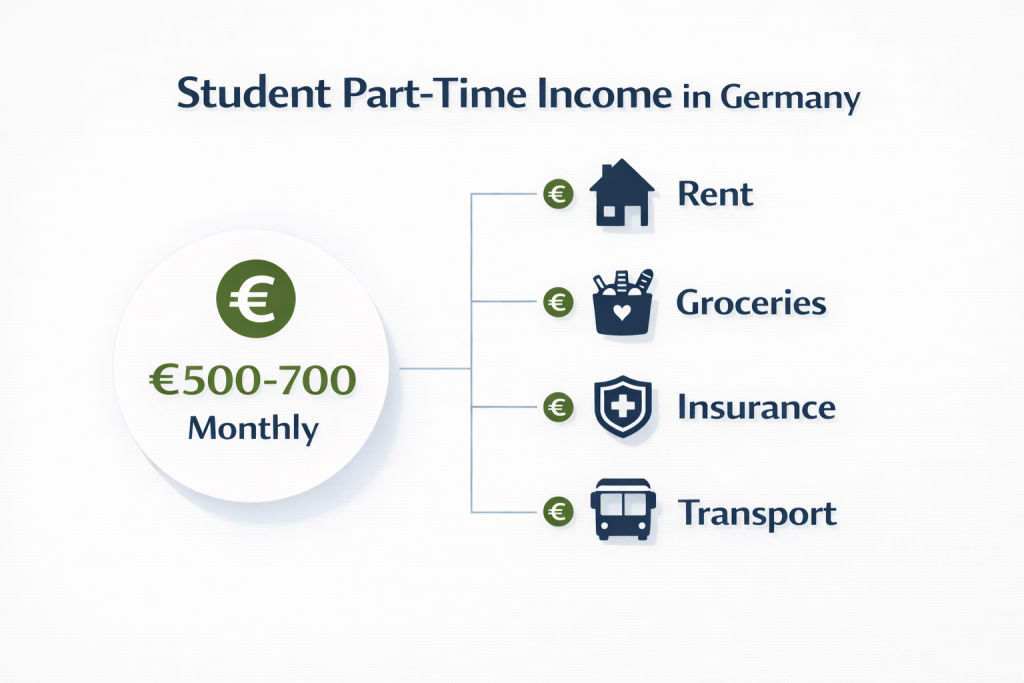
As an international student in Germany, you are legally allowed to work up to 120 full days or 240 half days per year without a special work permit. This works out to roughly 20 hours per week during term time, with more flexibility during holiday periods.
Most students find part-time work in retail, hospitality, university libraries, student services, research assistance, or logistics. The minimum wage in Germany is currently above €12 per hour, and most student jobs pay between €13 and €15 per hour. Working part-time realistically brings in between €500 and €800 per month, which significantly reduces the pressure on your blocked account.
The post-graduation benefits of studying in Germany for free for Nigerian students go beyond just saving money. After you finish your degree, Germany offers an 18-month job-seeking visa. This gives you a year and a half to find employment in your field while staying in the country legally. It is one of the most generous post-study visa provisions in Europe and one of the most underrated reasons why Germany is worth the investment of effort.
Common Mistakes Nigerian Students Make When Applying to Study in Germany
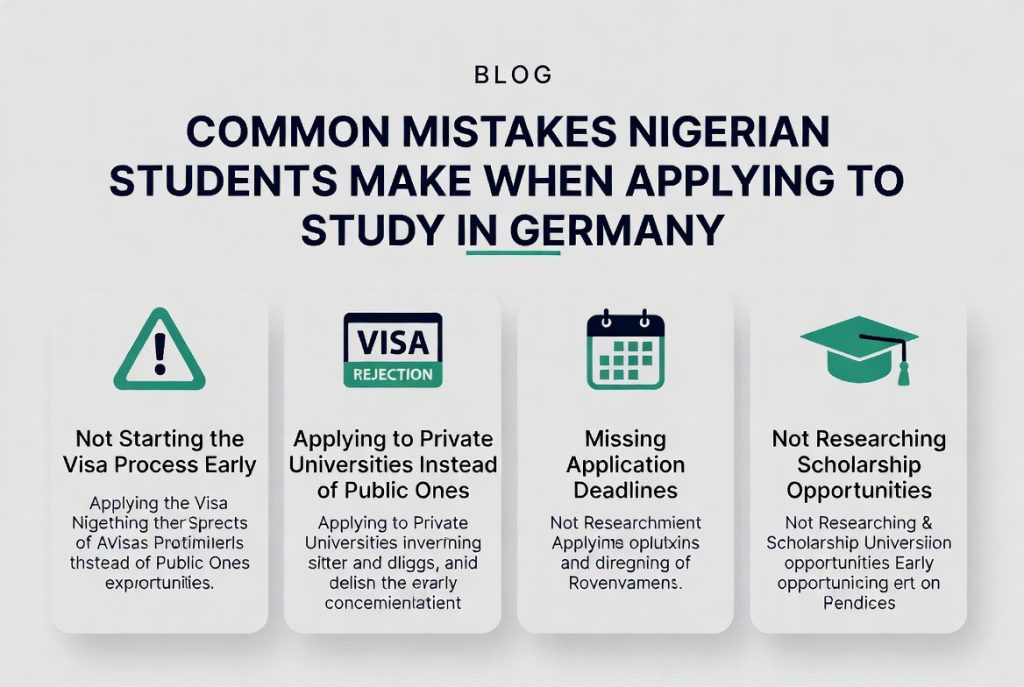
I have made one of the most expensive of these mistakes personally, so I am not listing these from a distance.
This is the single most costly mistake made by people trying to study in Germany for free for Nigerian students. Choosing a private university because it responded faster. This was my mistake. Private universities know how to market themselves, and they are efficient at getting students enrolled. But efficiency on their part often means significant tuition on yours. Always confirm whether a university is state-funded before committing. As someone who already paid €12,000 in tuition before discovering public universities, I can tell you this mistake is far more common and far more costly than people expect.
Skipping the Anabin check is an avoidable error for anyone planning to study in Germany for free for Nigerian students. Not checking Anabin before applying. Applying without confirming your qualification is recognised can result in a rejected application after months of preparation. Check Anabin first, every time.
Underestimating the blocked account Germany timeline. Some people find out about the blocked account requirement only after receiving their admission letter. At that point, they are scrambling to gather nearly €12,000 in a week. Start planning for the blocked account long before you even apply.
Language certification is one of the most common errors made by those planning to study in Germany for free for Nigerian students. Applying without the correct language certificate. Submitting an application without the required English or German language test, or with a certificate that has expired, is an automatic disqualification at most universities. Sit your language exam early.
Missing application deadlines. Germany operates on strict academic calendars. Missing a deadline by even a day can push your start date back by an entire semester or a full year.
Not registering your address on arrival. In Germany, address registration is a legal requirement. Your student enrollment, banking, and health insurance all depend on having a registered address. Do this within two weeks of arriving.
Life After You Arrive: What Nobody Tells You About Studying in Germany
The visa approval and the flight are not the finish line. In many ways, they are just the beginning of the adjustment.
Life after you successfully study in Germany for free for Nigerian students comes with a real adjustment period. Germany is an organised, process-driven country, and that can feel cold or bureaucratic when you first arrive. You will fill out forms, stand in queues, navigate systems in German, and encounter a very different pace of social interaction compared to what you are used to in Nigeria. People here are not unfriendly, but they tend to be more reserved in public settings. That takes some getting used to.
Beyond the academic journey, those who study in Germany for free for Nigerian students also face a social and cultural adjustment. Finding your footing socially is one of the less-discussed challenges. International student communities exist at almost every university, and they are genuinely helpful. Platforms like Tandem or university buddy programmes can help you meet people and practise your German. Getting out of the international student bubble and building real connections with local students takes effort, but it pays off enormously in terms of language skills, cultural understanding, and professional opportunities.
The weather will also be an adjustment. German winters are long, grey, and cold. Many students from Nigeria underestimate the psychological effect of this. A good winter coat is not optional. Getting outside even when it is cold and gloomy helps more than staying indoors.
Once you are settled, Germany is one of the most livable countries in Europe for a student. Public transport is reliable, healthcare is accessible, groceries are affordable, and the country’s central location means weekend travel across Europe is genuinely possible on a student budget. This makes it one of the best places in the world to study in Germany for free for Nigerian students.
If you want to understand the broader experience of moving to Europe from Nigeria, including what to expect emotionally and practically, this guide on how to move to Europe from Nigeria covers it in depth.
Frequently Asked Questions: Study in Germany for Free as a Nigerian
Can Nigerians study in Germany for free? Yes. Public universities in Germany charge no tuition fees to international students, including Nigerians. You pay only a semester contribution of around €150 to €350, which often includes a transport pass. Living costs are your main financial responsibility.
Can you get admission with only WAEC? In most cases, WAEC alone is not sufficient for direct university admission in Germany. You will typically need to complete a Studienkolleg first, which is a one-year foundation course that prepares you for German university entry standards. Some universities assess applications individually, so always confirm directly with your target institution.
What is the blocked account requirement for Germany? The blocked account is a special bank account you must open before your visa is approved. As of 2026, it requires a deposit of approximately €11,904 for the year. This money is released to you monthly after you arrive in Germany to cover your living expenses. Providers like Fintiba and Coracle are the most commonly used.
How long does the German student visa process take from Nigeria? After your visa interview at the embassy in Abuja or consulate in Lagos, processing typically takes two to three weeks. However, securing the appointment itself can take one to three months due to high demand. Book your appointment as soon as you receive your admission letter.
Do you need German to study in Germany? Not necessarily. There are hundreds of fully English-taught programs at public German universities. That said, learning basic German after you arrive makes daily life significantly easier and improves your employment prospects after graduation.
Is DAAD the only scholarship option for Nigerian students? No. DAAD Germany programs are the most well-known, but there are also scholarships from individual universities, state governments, and private foundations, including Heinrich Boll and Konrad Adenauer. Many students combine personal savings, family support, and part-time work income to cover their stay.
What happens after you graduate in Germany? After completing your degree, you are eligible for an 18-month job-seeking visa, which allows you to remain in Germany legally while searching for employment in your field. Once employed, you can apply for a work permit and eventually pursue permanent residency after two to five years of skilled work.
Final Thoughts on How to Study in Germany for Free for Nigerian Students
If I am being real with you, this journey is not always smooth. I faced rejections. I made expensive mistakes. I went down the wrong path before finding the right one. And even after arriving in Germany, there were moments of doubt, difficulty, and adjustment.
But here is what I know for certain.
Studying in Germany for free as a Nigerian student is real. It is not a trick, a rumour, or something that only works for other people. It is a functioning system built into the German higher education model, and it is fully accessible to Nigerians who take the time to understand how it works.
Anyone who wants to study in Germany for free for Nigerian students can do it. The people who succeed are not necessarily the most brilliant or the most connected. They are the ones who do their research, start early, prepare their documents properly, and do not give up after the first setback.
You now have a clearer picture of the path than I had when I started. That is a real advantage.
If you are ready to take the next step and handle your visa process with proper guidance, start here with the the GrandRoyal German student visa guide
And if you are still figuring out the bigger picture of what it means to build a life in Europe from Nigeria, this will help: How to Move to Europe from Nigeria.
Don’t rush it. Don’t guess. Do it right.